I’ve been reading about the Titanic since I was a kid. The iceberg, the lifeboats, the band playing on deck. I thought I knew the story. Most people do — or think they do.
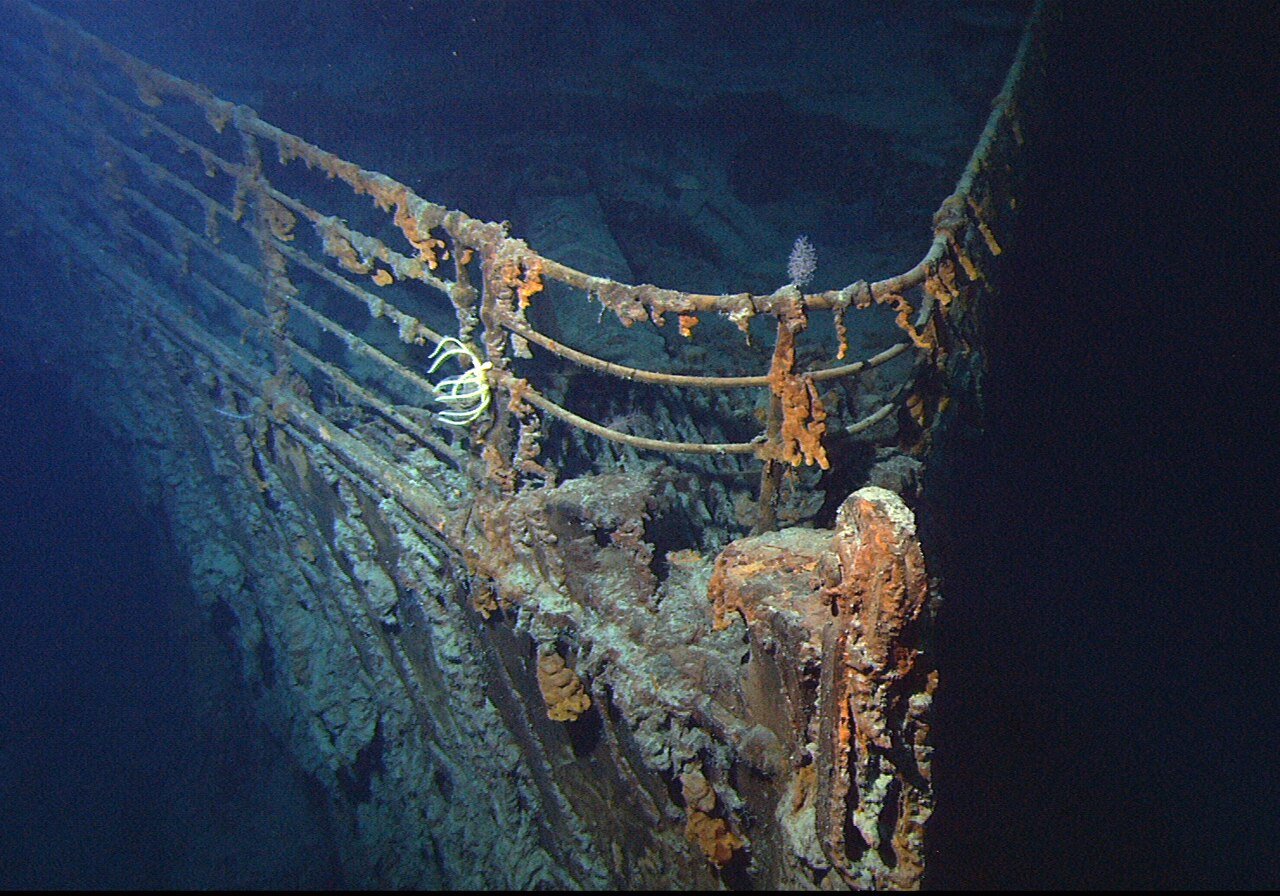
Then in May 2023, a company called Magellan quietly released something that stopped researchers, historians, and deep-sea explorers in their tracks. Not a new photograph. Not a documentary clip. Something fundamentally different — a complete, full-size, millimeter-accurate 3D digital copy of the entire wreck. Every inch of it. As if someone had reached down into the North Atlantic, pulled the ship out, and placed it somewhere you could actually walk around.
And what it revealed changed parts of the story that had been accepted as fact for over a century.
The Scan That Took Five Years to Build
This wasn’t a weekend project. Magellan had been developing the scanning technology for five years before the expedition even launched.
In the summer of 2022, a team headed out to a patch of the North Atlantic about 435 miles off the coast of Canada. They deployed two remotely operated submersibles — named, appropriately, Romeo and Juliet — down to roughly 12,500 feet below the surface, into water so cold and pressurized that it’s more hostile to human life than the surface of Mars.
For six weeks, the two submersibles did something no expedition had ever attempted: they mapped every single millimeter of the wreck. Not just the famous bow. Not just the iconic parts that appear in documentaries. Everything — the bow, the stern, the 3-mile debris field surrounding the ship, the mud between scattered objects. Every rivet, every porthole, every twisted piece of steel.
The resulting dataset included 715,000 images and 16 terabytes of data — estimated to be 10 times larger than any underwater 3D model ever attempted before. Spectrum News 1
The team then spent seven months back on land processing that data into what they called a “digital twin.” “It’s an absolutely one-to-one digital copy, a ‘twin,’ of the Titanic in every detail,” said Anthony Geffen, head of Atlantic Productions, the documentary company that partnered with Magellan on the project. Voice of America
What made this different from every previous image of the Titanic wasn’t just the resolution. It was the perspective. “Previously footage has only allowed you to see one small area of the wreck at a time. This model will allow people to zoom out and to look at the entire thing for the first time,” said Gerhard Seiffert, Magellan’s 3D capture specialist. NPR
For the first time in 111 years, you could see the Titanic as a complete object. As if the water had simply been drained away.
The Detail Nobody Expected
Before I get to the human stories the scan uncovered, I want to stay with the technical achievement for a moment — because one specific detail captures just how extraordinary this model is.
The digital model has such extraordinary detail that it’s even possible to read the serial number on the ship’s propeller. IFLScience
The propeller of a ship sitting 2.4 miles underwater, coated in over a century of rust and marine growth, in permanent total darkness — and the scan is sharp enough to read its serial number.
That single fact tells you everything about what changed between every previous expedition and this one.
What the Scan Actually Found
Here’s where it gets genuinely significant. Because the digital twin wasn’t just a visual achievement — it was a forensic tool. And the forensics produced findings that rewrote parts of the accepted record.
The engineers who saved hundreds of lives
This is the discovery that hit me hardest personally.
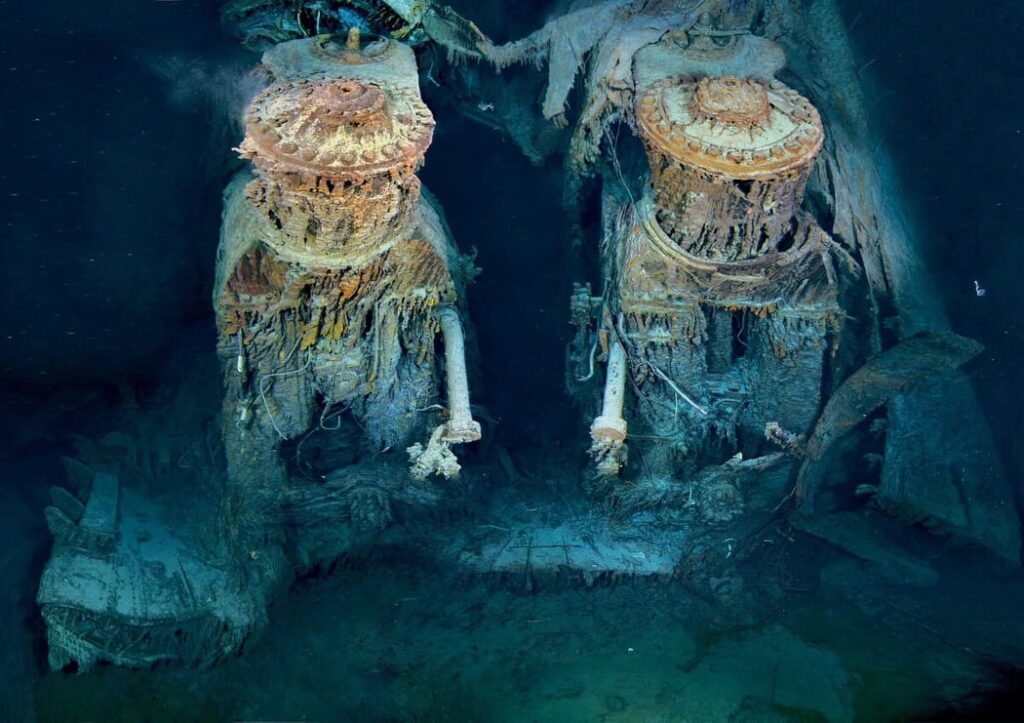
Researchers found that one of the ship’s steam valves was left open, which supports eyewitness accounts that the engineers remained in the boiler room for more than two hours after the ship hit the iceberg — nearly until the very end. Smithsonian Magazine
Think about what that means. These 35 men knew the ship was going down. They knew the water was rising. And they stayed at their posts in the engine rooms, keeping the electrical systems running, because without power there would be no lights and no ability to send distress signals.
“They kept the lights and the power working to the end, to give the crew time to launch the lifeboats safely with some light instead of in absolute darkness,” Titanic analyst Parks Stephenson told BBC News. Smithsonian Magazine
Those men are not household names the way the ship’s captain or its designers are. Most of them died. But the scan — a small open steam valve, still readable after 111 years — confirmed what some survivors had claimed and others had doubted. They held on until the last possible moment, and in doing so, they likely saved the people who got into those lifeboats.
The lifeboat that never launched