I still remember the first time I saw footage from the Bismarck wreck.
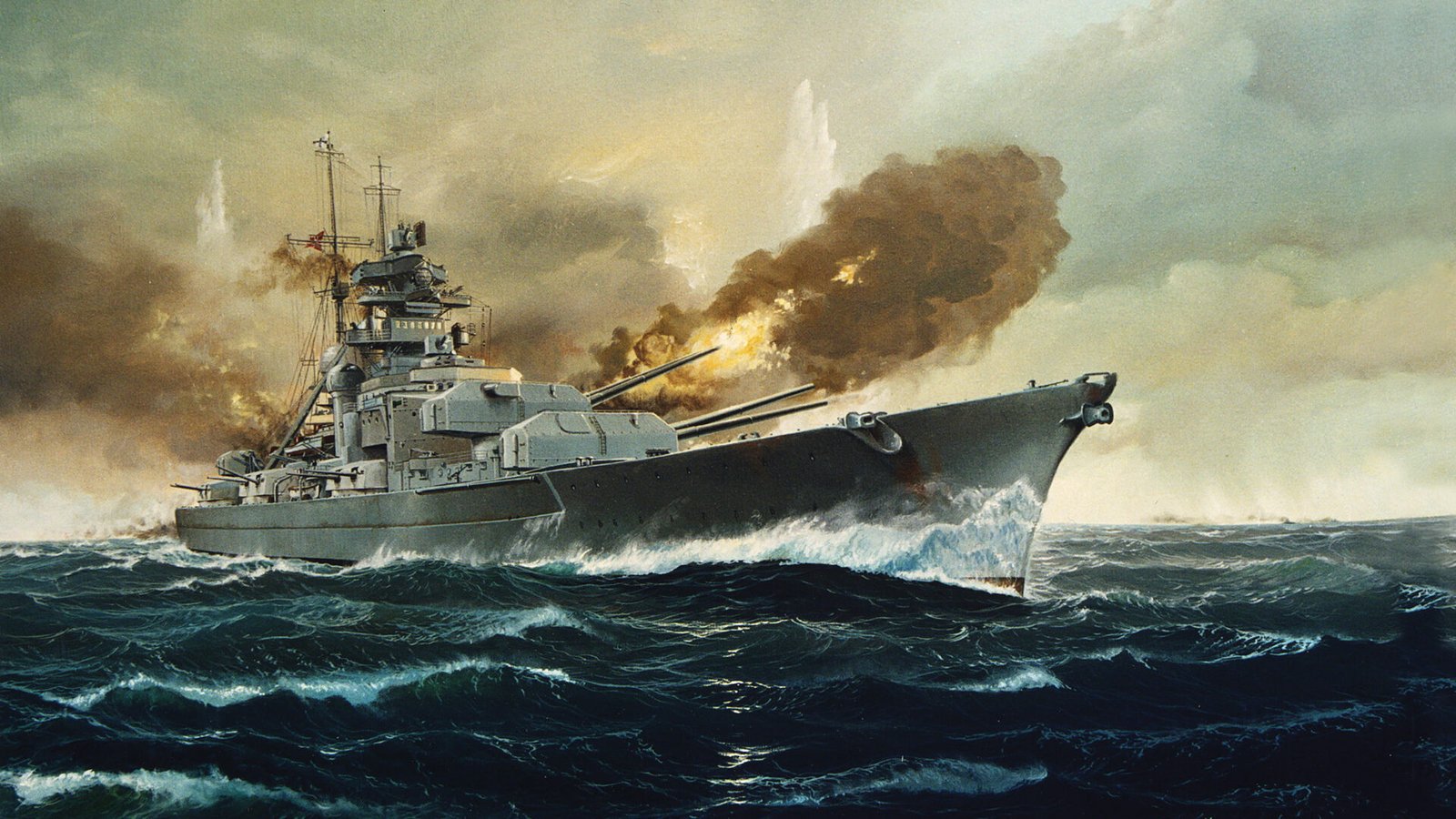
It was late — probably 2 in the morning — and I’d fallen down one of those YouTube rabbit holes that starts with a documentary about World War II and somehow ends with you watching grainy ROV footage of a ship sitting three miles underwater in the North Atlantic. I couldn’t stop watching. Not because it was beautiful, though in a cold, haunting way it was. But because something about it felt wrong.
The ship looked too intact. Too dignified. For something that supposedly got hammered by the entire British Home Fleet for nearly two hours, it didn’t look like a ship that had been obliterated. It looked like a ship that had decided to go down.
That feeling — that something didn’t add up — is exactly what drove scientists, filmmakers, and deep-sea explorers back to that wreck multiple times over the past 35 years. And what they eventually pulled up from the darkness? It genuinely rewrote the history books.
The Hunt That Almost Failed
Before we get to what the drones found, you need to understand how difficult it was to even find the Bismarck in the first place.
In 1989, oceanographer Robert Ballard — the same man who’d located the Titanic four years earlier — organized an expedition to find the wreck. His primary tool was a remotely operated vehicle called Argo, essentially a 12-foot steel sled loaded with cameras, sonar, and floodlights powerful enough to cut through the permanent darkness at that depth.
Here’s the thing people don’t appreciate: the North Atlantic at 15,000 feet isn’t like searching a swimming pool. The water pressure down there exceeds 6,000 pounds per square inch. That’s enough to crush a modern submarine. And Ballard was searching a 150-square-mile zone based on approximate coordinates from Royal Navy records. “Approximate” is a terrifying word when you’re hunting for something the size of two football fields on the floor of an ocean.
For days, the research vessel Knorr towed Argo back and forth in a grid pattern — what the team called “mowing the lawn.” People stared at monitors for hours. Nothing. Just silt, the occasional deep-sea creature, and the kind of silence that gets inside your head.
Then on June 8th, 1989, a shape appeared on the screen. Twisted steel. Large pieces of debris that could only have come from something massive.
They’d found it.
The First Thing That Didn’t Make Sense
When Argo drifted over the main wreck, the mood in the control room went from elation to something closer to unease.
The Bismarck was sitting upright on the slope of an extinct underwater volcano. Not crumpled. Not scattered in pieces across the seafloor. Upright, 820 feet long, and largely intact — like it had been lowered there carefully rather than sent down by one of the most brutal naval engagements in history.
Ballard’s team launched Alvin, a crewed submersible, for a closer look. The superstructure — the upper command towers and bridge areas — was genuinely destroyed. Jagged holes from British shells. Obvious carnage. That matched the historical record.
But the main hull armor? Almost untouched.
The Bismarck’s designers had built her with an armored belt nearly 13 inches thick along the waterline — designed specifically to stop the heaviest shells any enemy could throw at her. When Ballard’s team examined it, they found only eight significant holes above the waterline. Below it? Essentially nothing. No catastrophic torpedo damage. No gaping breaches.
The ship that British records said was “obliterated” had an armored hull that was structurally close to intact.
How does a ship survive that much punishment and still sink?
Cameron Goes Inside
That question sat unanswered for over a decade. Then in 2002, James Cameron — who at that point had spent years obsessing over the Titanic wreck for his 1997 film — led a new expedition. And this one wasn’t about filming the outside.
Cameron wanted to go in.
He brought two Russian Mir submersibles and a pair of small ROVs his team nicknamed “bots.” These things were compact enough to navigate flooded corridors, squeeze through doorways, and reach spaces no crewed vessel could ever access. They were essentially the first eyes inside the Bismarck since the ship went down in May 1941.
What they found was haunting in a way that’s hard to fully articulate.
The bots drifted through crew quarters where personal belongings were still scattered. Through engine rooms the size of cathedrals. Through passageways where over 2,000 men had spent their final hours. It wasn’t just a ship anymore. It was a tomb — and the footage made that impossible to forget.
But Cameron’s team wasn’t just there for atmosphere. They were running a forensic investigation. And the technical findings were what really shook everyone.
The Numbers That Changed Everything
Here’s the detail that stopped Cameron’s team cold.
The British battleships Rodney and King George V had collectively fired over 700 large-caliber shells at the Bismarck during the final battle. 700. At close range. For nearly two hours.
Cameron’s team found evidence of only two shells that had fully penetrated the main armored belt.
Two.
The rest had torn apart the superstructure, killed the crew manning the guns, destroyed the ship’s ability to fight and move. But the armored heart of the ship — the section specifically engineered to keep her afloat — had shrugged off the rest.
The bots also found something else: long, peeling tears in the hull plating below the armor belt. At first glance that looks like the torpedo damage everyone assumed was there. But the damage pattern wasn’t consistent with explosions. It was consistent with impact and stress — specifically, a 50,000-ton ship slamming into the seafloor and sliding thousands of feet down the side of an underwater volcano.
The mountain had done more damage to the hull than the Royal Navy.
Then came the most damning discovery. The internal decks beneath the main armored deck had been compressed downward by 10 to 13 feet. That kind of collapse doesn’t happen from shells punching in from outside. It happens when a ship fills with water from the inside, the weight of it crushing the internal structure as the vessel sinks.
The Bismarck had flooded from within.
What the German Survivors Had Been Saying All Along
Here’s where it gets genuinely strange — because this is actually not new information to the people who survived the battle.
German survivors, including officers, had been consistent for decades: with the ship crippled and the battle lost, the order was given to scuttle. Engineers opened internal watertight doors. Demolition charges with nine-minute fuses were placed in the engine rooms. The goal was to make sure the Bismarck never became a British war prize.
For years, this was largely dismissed. It sounded like wounded pride talking — a way for the German Navy to claim their ship was never truly beaten.
The drone footage made dismissing it a lot harder.
The intact armor belt directly supports scuttling. You’d expect to see it breached if external attack was what sank her. The internal structural collapse is exactly what happens when a ship is systematically flooded from within. The evidence lines up.
So Who Actually Sank the Bismarck?
Honestly? Both sides.
The British made the Bismarck’s destruction inevitable. The torpedo that jammed her rudders on May 26th — launched by an obsolete Swordfish biplane, of all things — turned the most powerful battleship afloat into a ship going in circles. After that moment, she was done. The two-hour bombardment the next morning destroyed her fighting capability completely, killed most of her crew, and reduced her superstructure to burning wreckage.
But the final act — the thing that actually sent her on a three-mile plunge to the seafloor — appears to have been an inside job.
The crew didn’t let the British have her. With shells still raining down and thousands of men dying, someone below decks opened the sea cocks and triggered the charges. It was a decision made in the last minutes of a ship that knew it was going down anyway.
What the drone footage did was give that decision physical evidence. It moved the scuttling argument from “survivor testimony” to “forensically supported conclusion.”
Why This Discovery Still Matters
I think about that 2 AM footage sometimes — the Bismarck sitting on that volcanic slope, almost regal in the darkness.
What gets me isn’t the military history, though that’s fascinating. It’s the sheer scale of what deep-sea exploration has made possible. Ballard’s Argo was revolutionary in 1989. Cameron’s bots in 2002 went further. The technology keeps improving, and every time someone sends a drone back down to a wreck like this, the historical record gets revised.
The Bismarck was supposed to be a simple story: Britain hunted her, found her, destroyed her. End of narrative.
Instead, the cameras showed us something more complicated and more human. A crew that, in the final minutes of their lives and their ship’s life, chose how it ended.
That’s not a story about defeat. That’s a story about the strange, grim dignity people find at the absolute edge of everything.
And it took a drone in the dark to finally let us see it clearly.