For decades, the wreckage of Soviet-era nuclear submarines has sat quietly at the bottom of the ocean, mostly forgotten by anyone outside a small circle of naval historians and environmental scientists. The general assumption was simple: it’s too deep, too cold, and too remote to matter. Out of sight, out of mind.
That assumption just got tested. And the results are worse than expected.
The wreck that changed the conversation
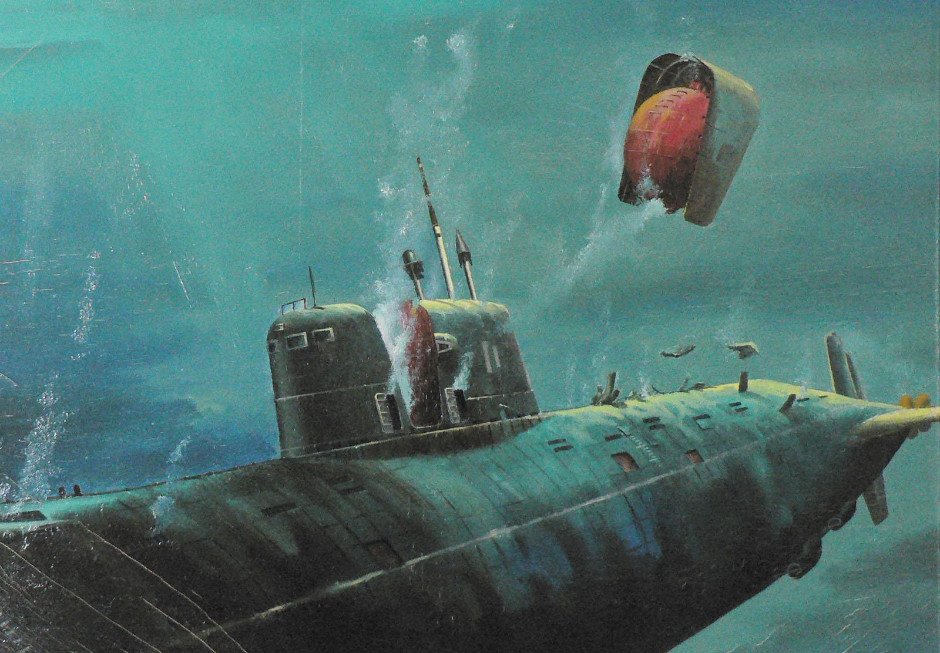
The story centers on the K-278 Komsomolets, a one-of-a-kind Soviet submarine built with a titanium hull that let it dive deeper than any American submarine at the time — past 3,300 feet. On April 7, 1989, a fire broke out aboard the sub in the Norwegian Sea. The crew fought it for six hours in freezing conditions before the Komsomolets sank, taking 42 of its 69 crew members down with it, more than a mile to the ocean floor.
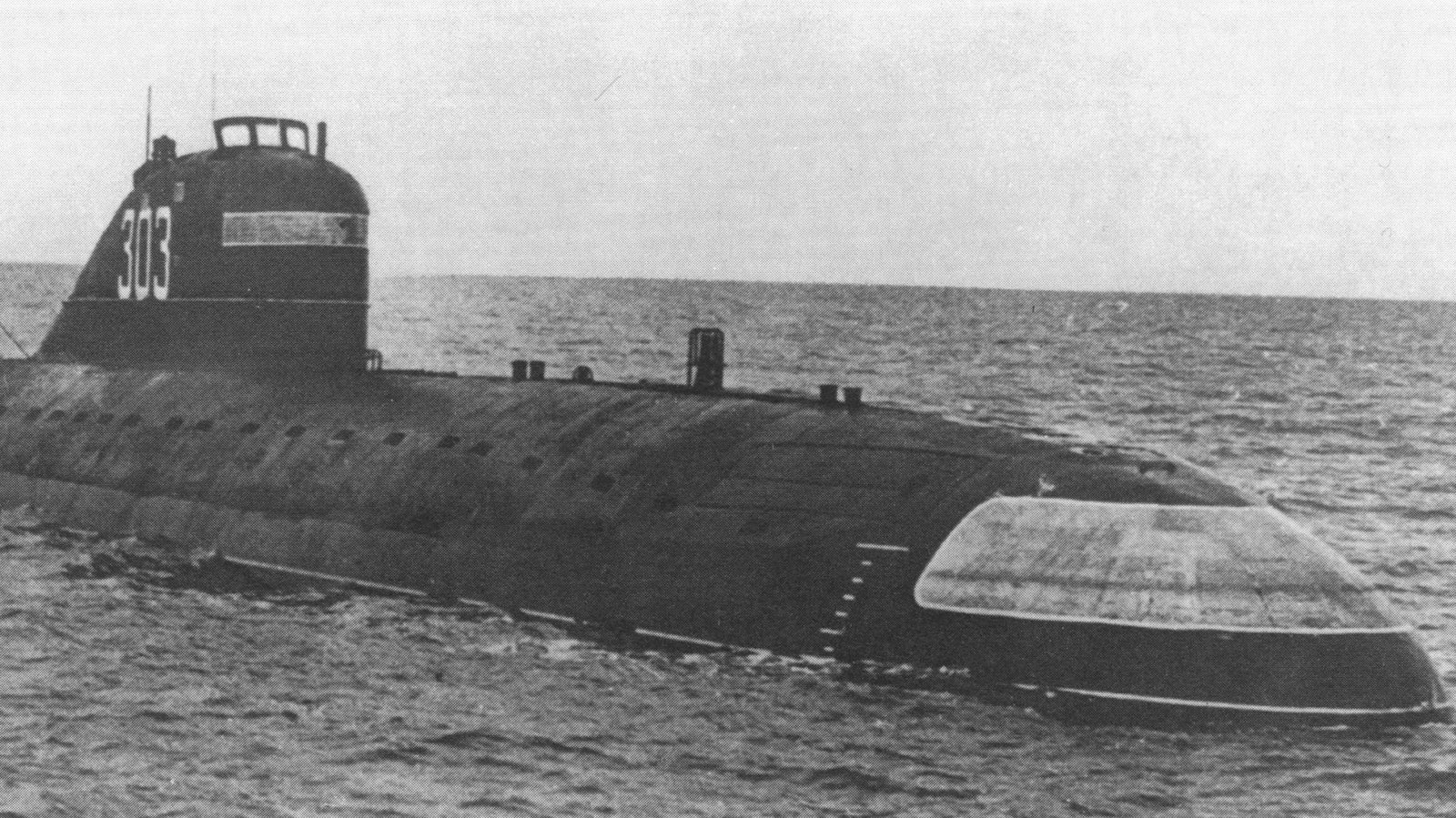
What makes the wreck dangerous today isn’t just the submarine itself — it’s the cargo. The Komsomolets went down with a nuclear reactor and two torpedoes carrying roughly 28 pounds of plutonium each. Plutonium is one of the most toxic substances known, and its radioactive half-life runs into the tens of thousands of years.
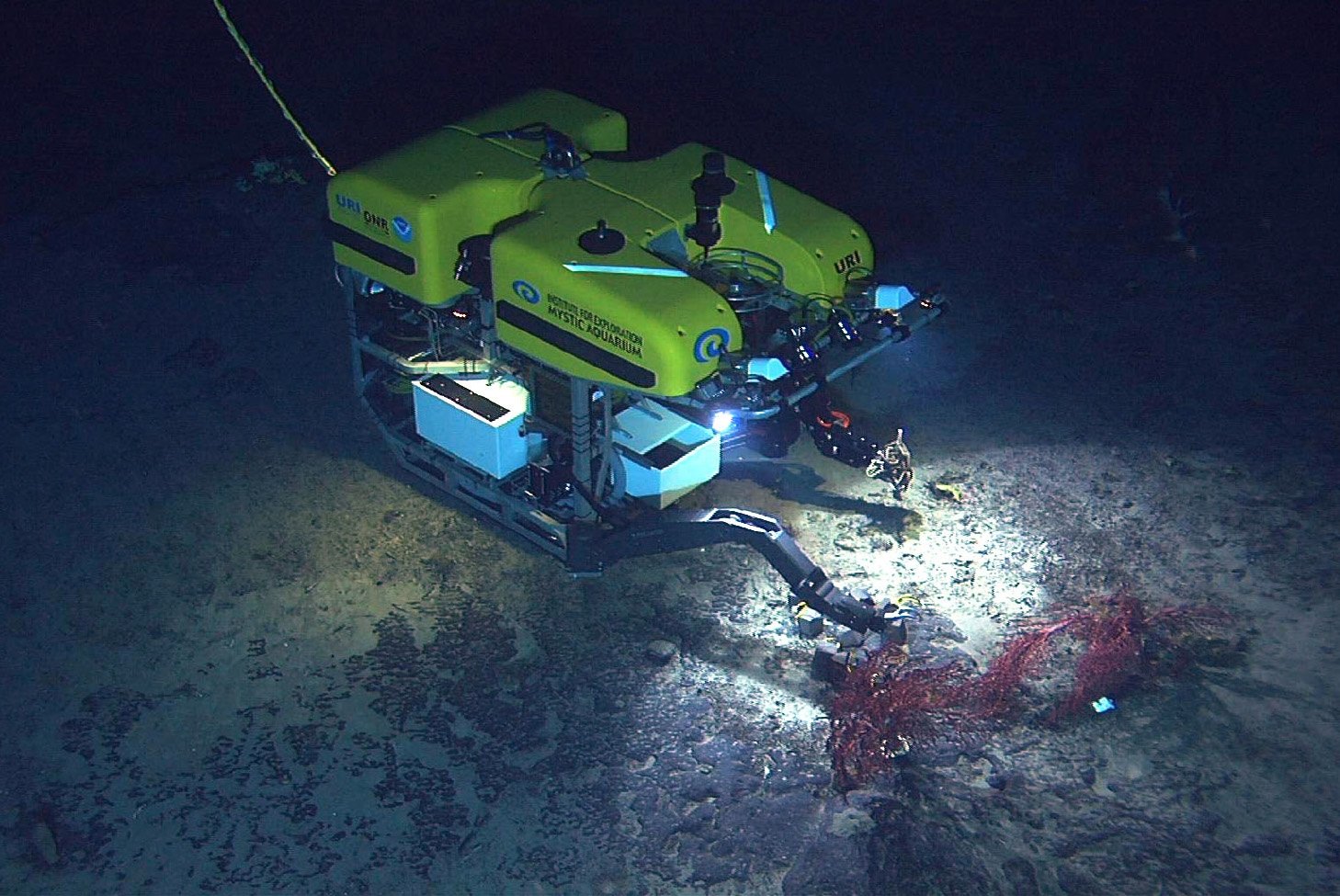
For years, officials maintained the wreck was stable. Cold water, immense pressure, and a sealed hull were supposed to keep everything contained. In 2019, a joint Norwegian-Russian research mission sent a remotely operated vehicle (ROV) down to check. What it found contradicted the stable-and-safe narrative.
What the robot actually measured
The ROV’s cameras caught something unsettling near one of the submarine’s ventilation pipes — a cloudy plume drifting out into the water. When researchers ran sensors and took samples, the readings were dramatic: radiation levels in that plume measured up to a million times higher than the surrounding seawater.
The radioactive element responsible was cesium-137, the same isotope associated with the Chernobyl disaster. Cesium behaves chemically similar to potassium, which means living organisms absorb it readily. It enters plankton, moves into small fish, then larger fish, and eventually up the food chain. Norwegian researchers have already detected trace cesium-137 in fish and crab samples from the region, though current levels are still considered safe to eat.
The takeaway from scientists involved in the mission was straightforward: this proves the wreck’s containment is degrading, not holding steady. The leak isn’t a one-time event — it’s ongoing, and it’s expected to get worse rather than better over time.
The Komsomolets isn’t the only one — and some are shallower
Once scientists started paying closer attention to the Komsomolets, attention turned to a wider problem: dozens of Soviet-era nuclear wrecks scattered across the Arctic, many in far shallower water.
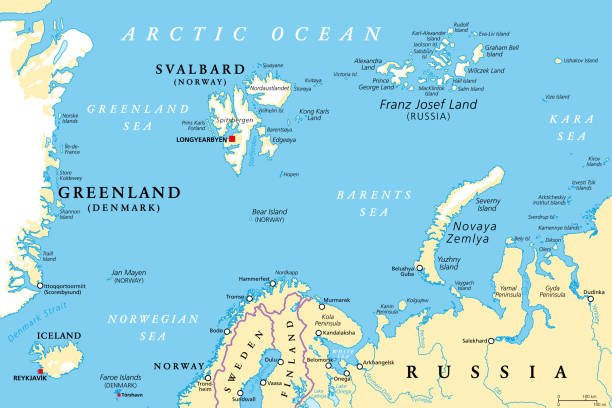
The Kara and Barents Seas, used by the Soviet navy as a dumping ground during the Cold War, reportedly contain 19 scuttled ships loaded with radioactive waste, around 17,000 containers of radioactive material, and 16 nuclear reactors — some still loaded with spent fuel.
One of the most concerning is the reactor from the K-27, an early Soviet submarine whose experimental liquid-metal-cooled reactor suffered a serious malfunction in 1968 that exposed and sickened crew members. After a decade of failed repair attempts, the Soviets towed the K-27 to the Kara Sea in 1982 and sank it deliberately — in water only about 100 feet deep — with roughly 800 pounds of highly enriched uranium still inside. Officials at the time cited cost and risk as the reason for scuttling rather than dismantling it. Scientists studying the situation today have raised concerns that, in much shallower water than the Komsomolets, a similar reactor failure could pose a more immediate risk if containment fails.
Then there’s the K-159, a submarine that had already been retired for 14 years and was being towed for disposal in 2003 when the pontoons keeping it afloat failed during a storm. The submarine sank in roughly 800 feet of water along with about 800 kilograms of spent nuclear fuel still inside. Nine of the ten crew members aboard for the tow died. Investigations afterward pointed to negligence in how the operation was planned and approved.
A graveyard near a city of 600,000 people
The most visually striking part of this story isn’t deep underwater at all — it’s sitting in shallow coastal water near Vladivostok, Russia’s main Pacific port. Locals reportedly call it the “submarine cemetery”: a collection of decommissioned Soviet submarines, some reports suggesting over 100 vessels, left to rust in place after the Soviet Union’s collapse in 1991 cut off funding for proper decommissioning.
Some of these submarines were nuclear-powered, and because the defueling process is complex and expensive, a number are believed to still contain reactor components or even spent fuel, sitting in corroding hulls in shallow water near a major population center.
International partners, including the United States and Japan, have funded cleanup efforts over the years, and meaningful progress has been made on many vessels. But the ones that remain tend to be the hardest and most expensive cases — which is exactly why they’re still there.
A separate, stranger chapter: the K-129 and the CIA
Not every wreck story here is about radiation. In 1968, a different Soviet submarine, the K-129, sank in the Pacific carrying nuclear-armed ballistic missiles. The U.S. Navy located the wreck roughly three miles down, and the CIA launched an extraordinary recovery effort known as Project Azorian — using a purpose-built ship publicly described as a Howard Hughes deep-sea mining vessel as cover.
In 1974, the recovery ship attempted to lift the submarine from the seafloor. According to the official account, the aging hull failed partway through the lift, and roughly two-thirds of the submarine broke off and fell back to the ocean floor. The CIA did recover a forward section containing two nuclear torpedoes, sonar equipment, and the remains of six Soviet sailors, who were later given a formal burial at sea, with footage of the ceremony eventually shared with Russia.
It’s worth noting that alternative theories about what really happened with the K-129 and the recovery mission have circulated for decades — including speculation that more of the submarine was recovered than officially admitted, or that the sinking itself wasn’t accidental. None of these alternative accounts have been verified, and they remain speculation rather than established fact.
So what happens now?
Right now, there’s no cheap or simple fix. For deep wrecks like the Komsomolets, divers and standard salvage equipment aren’t an option — proposals on the table include building a containment structure similar to the one used at Chernobyl, or sealing the wreck with a specialized gel or concrete. For shallower wrecks like the K-159, a full recovery has been discussed, but it carries real risk of breaking the hull apart during the lift, potentially making contamination worse rather than better.
Every option under discussion costs an enormous amount of money, which is a large part of why these wrecks have remained untouched for so long in the first place.
For now, scientists monitoring the region say current radiation levels in fish and seafood remain within safe limits. But the consistent message from researchers involved in recent missions is that these wrecks are not aging into stability — they’re aging into failure, just slowly enough that it’s been easy to put off dealing with them.